Tag: Digital Marketing

  • Small Business and Social Media

    Small Business and Social Media

    Social Media is the buzz word today. Social Media is the preferred platform for marketing for any business, big or small. Businesses are increasingly using Social Media platforms to connect with their audiences to generate brand awareness, increase sales and drive website traffic. This involves publishing great content on your social media profiles, listening to and engaging your followers, analyzing your results, and running social media advertisements. The process is better known as Social Media Marketing.

    Social Media presence has become essential in today’s business world. Small business owners may find it difficult to devote time to create and manage content on this new channel. However, with help of a good strategic plan and good marketing sense, any business can successfully manage a social media presence.

    There are countless social networking websites. There are social media platforms out there for everything and everyone, including ones to connect people with shared interests, similar hobbies, comparable demographics, and much more.

    It is difficult to maintain a social profile on all platforms and not all platforms are suitable for every kind of business. Therefore, to ensure a successful Social Media Marketing Campaign you should identify which social media network is right for your business. Three quick steps to help you choose optimal social media platforms for your business are:

    1. Define your Goals
      It is important to have specific goals in place before you move forward. Your objectives will determine your marketing goals, target audience, the content you will create and ultimately decide the best social media platforms for you.
    2. Determine which channels your target audience is using
      It is to your advantage to analyze which platforms your audience prefers and to seek them out on the networks they’re already using. Several market survey reports describe the user profiles of different Social Media platforms. It would help you choose the one’s which are closest to your customer profile.
    3. Choose the content you would like to create
      Different types of content work better with certain social media platforms, so it’s integral that you consider the type of content you like to create and that works best with your brand. The type of content you create will depend on a number of things, including your industry, your brand, and your target audience.

    Once you’ve settled on the goals you want to achieve with social media, determined where your audience is already hanging out and decided what type of content works best for you, you can then go through and compare the different social media platforms to determine which one will best meet your needs.

    The major social media platforms (at the moment) are Facebook, Instagram, Twitter, LinkedIn, Pinterest, YouTube, and Snapchat.

  • Building an Online Marketing Strategy

    Building an Online Marketing Strategy

    Today, having a website is a necessity but just having a website is not enough. You have to build a solid online marketing strategy to leverage your website to generate new business for you. We already discussed how a website can help small and medium businesses, especially now, when the world is facing unpredictable lock downs due to COVID-19. If you are new to Online marketing check what Online Marketing is all about and how it can help your small business.

    Once you have your website in place, crossed all ‘t’s and dotted all ‘i’s, you are ready to plan your online marketing strategy. Building a fail-safe Online Marketing Strategy can be divided into seven simple steps:

    1. Identify your target audience

    First step is to identify who are your prospect customers. It help you shortlist their general profile like gender, age group, geographical area, education etc, which in turn will help you choose appropriate mediums to market your business.

    2. Understand and identify your prospect’s requirements

    Unless you know what exactly your customers are looking for, you cannot design effective marketing communication. Identifying your customer needs will help you connect with them and develop your own USP.

    3. Identify right Social Media platforms

    Social media presence is of utmost importance to any business these days. But with increasing number of social media platforms, having a presence and maintaining all channels becomes difficult and costly. Also, not all people use every social media platform. Understanding the social media channels your prospect customers use is the key to reach out to them.

    4. Optimize your Website

    Optimizing website plays an important role both in strength of your online presence as well as customer engagement. Website should be optimized not only for the search engines to rank higher in the search result, but should be optimized for the users to provide great browsing experience.

    5. Create Useful content to engage your users

    There may be hundreds of websites selling the same product or service, what will make you stand apart is if you provide useful information about your products and knowledgebase for your customers to solve their problems. Informative and original content will significantly increase your user engagement.

    6. Connect with your customers and website users

    The marketing effort should be persistent. Keep your customers engaged by sending them periodic newsletters with relevant information in form of emails. Connect with them of Social media platforms and participate in relevant discussions to directly or indirectly hi-light your USP.

    7. Website analysis

    Last and probably the most important step in this whole process is website analysis. Unless you track the performance of your online marketing campaigns and user interaction on your website you cannot measure the success of your marketing efforts. You need to track and analyze the actions you initiated as your online Marketing by going through daily and monthly reports on your website traffic, sources, ranking and queries will give you a good idea as to where you stand.

    Web Apps Interactive is a Web Development and Online Marketing Company which provides complete end to end solutions to bring your business online and make it successful. We can assist you in every step of the way in planning and executing a successful Online Marketing Strategy for your business. For more information or any queries regarding our services contact us on email at info@webappsinteractive.com or call us at 8591633904.

  • What is Online Marketing?

    What is Online Marketing?

    Simply put, Marketing is the process of getting potential clients or customers interested in your products and services. Marketing is what you say and how you say when you want to explain how awesome your product or service is and why people should buy it. It is an ongoing communications exchange with customers in a way that educates, informs and builds a relationship over time.

    Online Marketing ServicesAs mentioned above, any effort to spread the word about your company, products or services to sell or increase your sales is known as Marketing. It includes all activities and processes for creating, communicating, delivering, and exchanging offerings that value for customers, client, partners and society at large. And, when these efforts use Internet to reach people, it is called Digital or Online Marketing. In simple words, all marketing activities which involve use of internet or any form or electronic media is known as Digital or Online Marketing.  

    In today’s time and world, Digital or Online Marketing has a huge edge over traditional Marketing. Find out how Digital Marketing is better than Online Marketing.

    Digital or Online Marketing can be categorized into several categories. Some of the major categories of Online Marketing include:

    Search Engine Optimization (SEO)

    Search Engine Optimization or SEO is the process of optimizing your website so that it ranks higher in the organic or unpaid search results for targeted keywords relevant to your business, product or service. Optimization of website has many aspects and include things like adding and optimizing title tage, meta descriptions, links, content etc so that search engines will be able to understand what they’re seeing, and the users who arrive via search will like what they see.

    Search Engine Marketing (SEM)

    Search engine marketing is the practice of marketing a business using paid advertisements that appear on search engine results pages. In a way, it is paid version of SEO where marketers pay Search Engines to display ads in their search results in the hope to drive traffic of prospect customers, to their product landing pages. In paid search advertising, sponsored ads appear at the top of and on the side of search engine results pages to gain more visibility and prominence than the organic results.

    Content Marketing

    Content Marketing is defined as a strategic marketing approach focused on creating and distributing valuable, relevant, and consistent content to attract and retain a clearly defined audience — and, ultimately, to drive profitable customer action. It is a process where you provide truly relevant and useful content to your prospects and customers to help them solve their issues.

    Social Media Marketing (SMM)

    Social Media Marketing is the use of social media platforms to connect with your audience to build your brand, increase sales, and drive website traffic. Social media marketing includes activities like posting text and image updates, videos, and and other content tailored to target audience for engagement. The major social media platforms (at the moment) are Facebook, Instagram, Twitter, LinkedIn, Pinterest, YouTube, and Snapchat.

    Affiliate Marketing

    Affiliate Marketing is generating sales and revenues by promoting your products or services on another business website. You offer certain amount of commission or revenue sharing to your affiliates or marketing partners for referring your products and services. Any sales through affiliate reference channels earns commission for the referring affiliate. The process works vice versa too.

    Email Marketing

    Email marketing is the process of sending commercial messages through email to targeted consumers. It is a highly effective digital marketing strategy of connecting with your leads, nurturing them, and turning them into customers, consistently winning out over all other marketing channels. It is a direct form of marketing, similar to marketing through snail mail, but email marketing is much more efficient for your wallet and for the environment since it’s totally paperless!

    Pay per Click Marketing (PPC)

    Digital MarketingPay per Click marketing is a model of internet marketing in which advertisers pay a fee each time one of their ads is clicked. It is a way of using online advertising to generate clicks to your website. Search Engine Marketing is PPC Marketing but PPC is not limited to Search Engines. Several Social Media websites, online directories and other such websites offer PPC advertising to drive targeted traffic to your website.

    So, Online marketing is classified into different categories based on the online method or medium you use to advertise your business.

    Web Apps Interactive offers complete Online Marketing Solutions tailored to your requirements and within your marketing budget. To know more about our services feel free to call us or write to us at info@webappsinteractive.com.

  • Why Online Marketing is better than Traditional Marketing methods like fliers?

    Why Online Marketing is better than Traditional Marketing methods like fliers?

    Marketing is an important component of any business. Marketing creates your brand presence, increase your business reach and drive sales. Any business, big or small dedicates a marketing budget, however, the important question is where and how to spend this budget to get optimal results.

    Successful marketing helps business connect with potential customers in best possible way, is interactive and provides an actual return on investment. This leads us to the question Traditional Marketing or Digital Marketing? Let’s see the difference between Traditional Marketing and Digital Marketing and weigh their pros and cons.

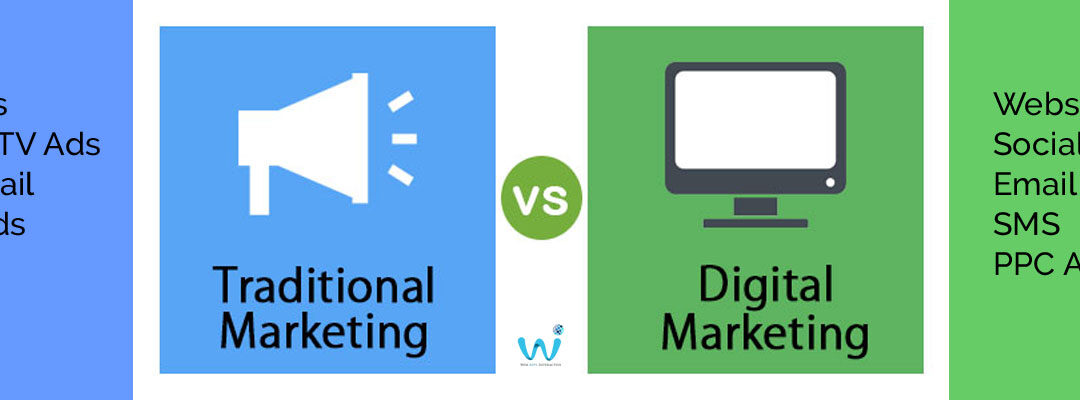
    What is Traditional Marketing?

    Traditional marketing can be defined as conventional marketing using various offline advertising and promotional methods. Some of the major mediums of traditional marketing include:

    • Print Ads (magazines, newspapers)
    • Mass Media Ads(TV, radio etc)
    • Direct Mail (Catalogue, postcards, brochures)
    • Outdoor Marketing (Billboards, fliers etc.)

    What is Digital Marketing?

    Online Marketing or Digital Marketing is the new way of Marketing. It refers to marketing using online advertising and promotional methods over the internet and mobile devices. Digital Marketing includes platforms like:

    • Websites
    • Social Media (Facebook, Twitter, Instgram etc)
    • Mobile Advertisement (SMS, Whatsapp)
    • Email Advertisements
    • Paid Search Ads, Display Ads

    Though the objective is same in both types on marketing, Digital Marketing is more versatile than Traditional Marketing. With immense growth in technology, Digital or Online Marketing can help businesses generate qualified leads at much lesser cost as compared to Traditional Marketing methods.

    Some benefits of Digital Marketing are:

    1. Lower Cost: Online Advertisements, whether Google Ads, Social Media Ads or SMS cost much less that newspaper, television and radio advertisement. This is especially beneficial for small and local businesses, start-ups to market their products and services quickly at much lower cost.
    2. Quick and Real time results – With traditional marketing you have to wait long periods for results and there is no accurate way to track effectiveness of your marketing effort and spend. Online Marketing on the other hand, lets you measure results quickly. It enables you to see number of visitors, conversion rates etc. which give you quick feedback on your marketing efforts as well as help you refine your marketing campaigns.
    3. Higher Exposure – Traditional Marketing’s reach is limited by area and time. For example a Newspaper Ad or Flier will give you a day’s exposure limited to area of circulation. Online Marketing on the other hand, let’s you select your audience, location and time of your advertisement.
    4. Higher Engagement – Traditional Marketing methods do not allow you to interact with your audience. Online Marketing on the other hand, lets you engage your audience in real time through Chats, Emails and SMS.
    5. Easy Analysis and Strategy refinement opportunity – Online Marketing methods allow you to easily analyse your marketing effectiveness by measuring your advertisement reach and interaction. It also gives you a good estimate on return on your marketing budget by measuring conversions and sales.

    Above discussion clearly reveals that today, Digital or Online Marketing has a definite edge over the traditional methods of marketing. This is especially true for start-ups and small businesses. Find out how Online Marketing can help small businesses? If you have not tried Online Marketing yet, we would suggest you should give it a shot. There is little risk and great reward. If you still have any questions, Contact us online or call us at 8591633904 to design your Online Marketing Campaign.

    Web Apps Interactive is a complete solution, Web Development and Online Marketing Company which can take care of all your Online Marketing needs.

  • How digital marketing can help small businesses?

    How digital marketing can help small businesses?

    Today, regardless of your company size and whether you are company doing business online or not, Digital Marketing has become an important part of the overall marketing strategy of any business. This is especially true if you are a small and new business just starting up. Most businesses invest in offline marketing options like bill boards, flyers and mailers to target new customers. These methods are expensive and can reach only a small fraction of your target customer base.

    Digital Marketing on the other hand significantly increases your reach and compliments your offline efforts to market your business. Several benefits of digital marketing include:

    1. You can reach a larger number of potential customers in limited budget.
    2. You can track and measure your marketing efforts
    3. It is cheaper than offline marketing methods like hoardings, posters and flyers.
    4. It helps create and expand your brand awareness with little effort as compared to traditional marketing methods.
    5. It helps you compete with older and bigger businesses in your area.

    There are five main areas of Online Marketing that should suit smaller businesses. These methods include:

    • Search Engine Marketing
    • Local Search Marketing
    • Content Marketing
    • Social Media Marketing
    • Email/SMS Marketing

    If you are a small business with limited marketing budget, you should include all the five areas of Digital Marketing above in your overall marketing strategy. Some of these areas you can manage yourself, however, if you don’t have time to dedicate to these efforts and find it difficult to keep up with the multiple changes that transpire in each of these strategies, you can have professional help assist you or you can outsource these efforts to a professional.

    If you are looking for assistance to plan a digital marketing strategy for your business call us at +91 8591633904 or contact us online. We offer end to end solutions for all your Digital and Online Marketing needs.

Pin It on Pinterest